

HSE Scientists Reveal What Drives Public Trust in Science
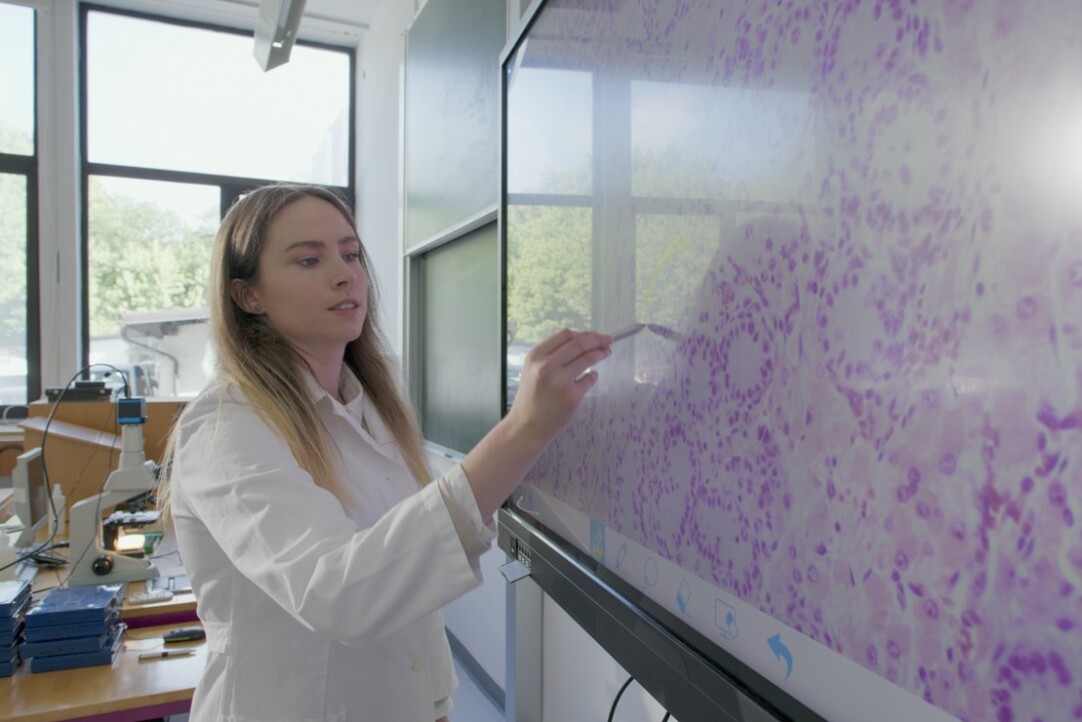
Researchers at HSE ISSEK have analysed the level of trust in scientific knowledge in Russian society and the factors shaping attitudes and perceptions. It was found that trust in science depends more on everyday experience, social expectations, and the perceived promises of science than on objective knowledge. The article has been published in Universe of Russia.
The advancement of science and technology is a key driver of socio-economic progress. Trust in science is essential for the dissemination of knowledge, the acceptance of scientific findings, and support for research. International surveys, including the Wellcome Global Monitor and studies by the Pew Research Center, indicate that trust in science remains relatively high worldwide. However, in times of rapid social and political change—for instance, during a pandemic—new challenges emerge, and levels of trust in science may decline.
Researchers at the HSE Institute for Statistical Studies and Economics of Knowledge (ISSEK) Ivan Iudin and Valentina Polyakova analysed data from the Monitoring Survey of Innovative Behaviour of the Population, conducted between late 2020 and early 2021, to examine whether overall trust in science differs from trust in specific fields and to identify the factors influencing both.
The survey included more than 6,000 respondents aged 18 to 65, who were asked about their level of trust in scientific institutions in general and in the results obtained within six specific fields of science. According to the survey, 53% of respondents trust universities and 43% trust scientific organisations. Scientific results in medicine inspired the greatest confidence (41%), while the social sciences and humanities ranked lowest, with only 19% of respondents expressing unconditional trust.
In order to clarify the drivers behind these results, the researchers examined four factors underlying trust: perceived motivations of scientists, scientific literacy, perceived promises and reservations about science, and cultural engagement with science.
Perceptions of scientists’ motivations were assessed by asking respondents to rate their agreement with the following statements: 'Scientists help solve challenging problems,' 'Most scientists seek to improve the lives of ordinary people,' and 'Scientists are passionate individuals who work for the benefit of humanity.' Scientific literacy was assessed through a test measuring knowledge of basic school-level scientific facts, understanding of individual phenomena, and familiarity with scientific achievements and procedures. Respondents were asked to identify whether specific statements were true or false, such as: 'The Earth revolves around the Sun,' 'An electron is smaller than an atom,' and 'A laser works by focusing sound waves.'
Perceptions of the promises of science and technology, as well as reservations about them, were assessed based on respondents’ agreement or disagreement with statements such as: 'The development of science and technology brings more benefits than harm,' 'Science and technology make our lives easier and more comfortable,' 'People today place too much importance on scientific and technological achievements, neglecting the spiritual side of life,' and 'Advances in science and technology can have unexpected, dangerous consequences for human health and the environment.'
Cultural engagement with science was measured using the Scientific Information Consumption Index, which reflects how frequently individuals attend cultural and educational events and consume popular scientific content through reading, viewing, or listening.
The findings suggest that people’s trust in science is driven more by social perceptions and attitudes than by their scientific knowledge or engagement with science. Acceptance of positive stereotypes about scientists increases the likelihood of trusting scientific institutions by 5.4 times. When considering specific fields, this effect is strongest for medical and agricultural sciences, where the likelihood of trusting the results increases 8–12 fold. Adopting a scientific worldview increases the likelihood of trusting scientific institutions by 1.7 times but decreases trust in the social and human sciences by a factor of 0.6–0.7. Believing in the promise of science significantly increases trust in both institutions and scientific results, especially in the natural, exact, and engineering sciences, where trust rises by 20 to 26 times. While perceiving risks in science and technology reduces trust in institutions, it actually doubles trust in results for the natural, exact, engineering, and agricultural sciences. Similarly, regular consumption of scientific information slightly lowers trust in institutions (by 0.76 times) but boosts trust in results in the natural and exact sciences (by 1.4 times).

Valentina Polyakova
'Our study demonstrates that, overall, Russians tend to trust scientists and scientific institutions. This trust is grounded in the belief that scientists have good intentions and that scientific advancements lead to improvements in quality of life,' notes Valentina Polyakova.

Ivan Iudin
Ivan Iudin highlights several interesting patterns revealed by the study: 'With age, the likelihood of trusting scientific results decreases across all fields except agricultural sciences, while trust in scientific institutions remains unchanged. Women are generally more likely than men to trust scientific institutions, as well as results in the humanities. Urban residents exhibit higher confidence in institutions and in the results of the natural and exact sciences, engineering, and medical sciences. Conversely, rural residents show greater trust in the results of the social sciences and humanities.'
According to the authors, understanding these patterns can help guide science policy. In the event of a crisis of trust in science, science communication should emphasise the tangible benefits of scientific progress and their relevance to everyday life.

See also:

‘The Peak of Stupidity’ and ‘The Valley of Despair’: HSE Economists Propose an Explanation for the Dunning–Kruger Effect
The Dunning–Kruger effect, which describes a sharp surge in self-confidence among beginners followed by an equally rapid decline as they gain experience, can be explained by the nature of the learning process and the acquisition of new knowledge. This conclusion was reached by Andrey Vorchik of the HSE Faculty of Economic Sciences together with independent researcher Murat Mamyshev. They developed a mathematical model of learning and demonstrated how subjective confidence is formed and changes as knowledge accumulates, as well as how teachers can reduce the ‘valley of despair’ experienced by learners.
Toffee and Risk: Scientists Discover Why People Who Crave Sweets Make More Impulsive Choices
Having a sweet tooth may be linked not only to eating habits but also to the way people make decisions. Researchers at HSE University have found that people with a preference for sweet foods tend to behave more impulsively—not because they want immediate rewards, but because they are less willing to tolerate uncertainty. These findings may help improve treatments for addiction. The study findings have been published in Frontiers in Psychology.
Physicists Find a Way to Model Ion Parameters in Plasma in Seconds
Researchers from HSE University and the Moscow Institute of Physics and Technology (MIPT) have developed a set of simple analytical methods for calculating the properties of heavy ions in helium under the influence of a strong electric field. The new approach speeds up calculations of ion mobility and ion–molecule reaction rates by thousands of times while maintaining sufficient accuracy for plasma jet modelling. The findings have been published in the journal Physica Scripta.
Two Years of Growth or Decline: How to Choose an Investment Strategy
Economists from HSE University, together with colleagues from international universities, have analysed stock market movements over almost a century and proposed an investment strategy that could have delivered returns nearly twice as high as the market average. Their research suggests following a momentum strategy during periods of sustained market growth and switching to a value strategy after prolonged market declines. The study has been published in the Journal of Banking and Finance.
Researchers Reveal Link Between Attention and Communication Difficulties in Autism
Researchers at HSE University have examined how communication difficulties in children with autism are related to brain function. The findings show that not only language networks but also attention networks play an important role. The weaker the connections involved in maintaining focus and switching attention, the more pronounced communication difficulties were. The study has been published in European Child & Adolescent Psychiatry.
Scientists Discover Why Some People Wore Masks During COVID-19 While Others Did Not
Why do some people voluntarily follow new rules while others ignore them? Researchers at HSE University have found that the answer lies not so much in people's willingness to cooperate, as previously believed, but in their ability to empathise with others. Empathy proved to be the strongest predictor of whether people chose to wear face masks voluntarily during the COVID-19 pandemic. The findings have been published in Frontiers.
Physicists at HSE University and FIAN Discover Way to 'Photograph' Sound for Testing Materials Used in 6G Communications
Researchers at HSE University, in collaboration with colleagues from the Lebedev Physical Institute of the Russian Academy of Sciences (FIAN), have developed a method for rapidly determining how firmly a film is bonded to a substrate. This is important for the creation of ultrahigh-frequency acoustic filters, which are key components of next-generation 5G and 6G communications. For the first time, researchers have succeeded in measuring the lateral rigidity of the bond between a two-dimensional material film and a substrate in this way. The study results have been published in Applied Physics Letters.
Scientists Create Open Dataset for Studying Concentration
A team of Russian researchers, including scientists from HSE University–St Petersburg, has developed the first open multimodal dataset containing recordings of brain activity, heart function, and video observations to help researchers understand what happens in the human brain during deep concentration. In the future, the dataset could accelerate the development of neural interfaces, rehabilitation technologies, and AI systems. The article has been published in Scientific Data.
Scientists Propose Method for More Efficient Resource Use in Machine Learning
An international group of researchers, including mathematicians from the AI and Digital Science Institute at the HSE Faculty of Computer Science, has provided a theoretical justification for a simple and computationally efficient method of estimating uncertainty in Stochastic Gradient Descent (SGD). The paper has been published on the scientific preprint server arXiv.org and presented at AISTATS 2026.
Team Success: Aligning Means with Objectives
In corporations, sports, and academia, people often face challenges they cannot handle alone. In such cases, selecting the right team is crucial. Tatiana Mayskaya, Associate Professor at the HSE Faculty of Economic Sciences and the International College of Economics and Finance, together with colleagues from foreign universities, examined team characteristics and found that less diverse teams are better suited to objectives where a high average performance is important, whereas more diverse teams are preferable when avoiding failure is critical. The paper has been published in Economic Theory.